
An Astorga project runs through six phases, from consultation and design through engineering and permits, construction, startup, and aftercare. There’s a written scope, a named point of contact, and a clear owner decision at every step. Timelines carry variables we explain before you sign, not after.
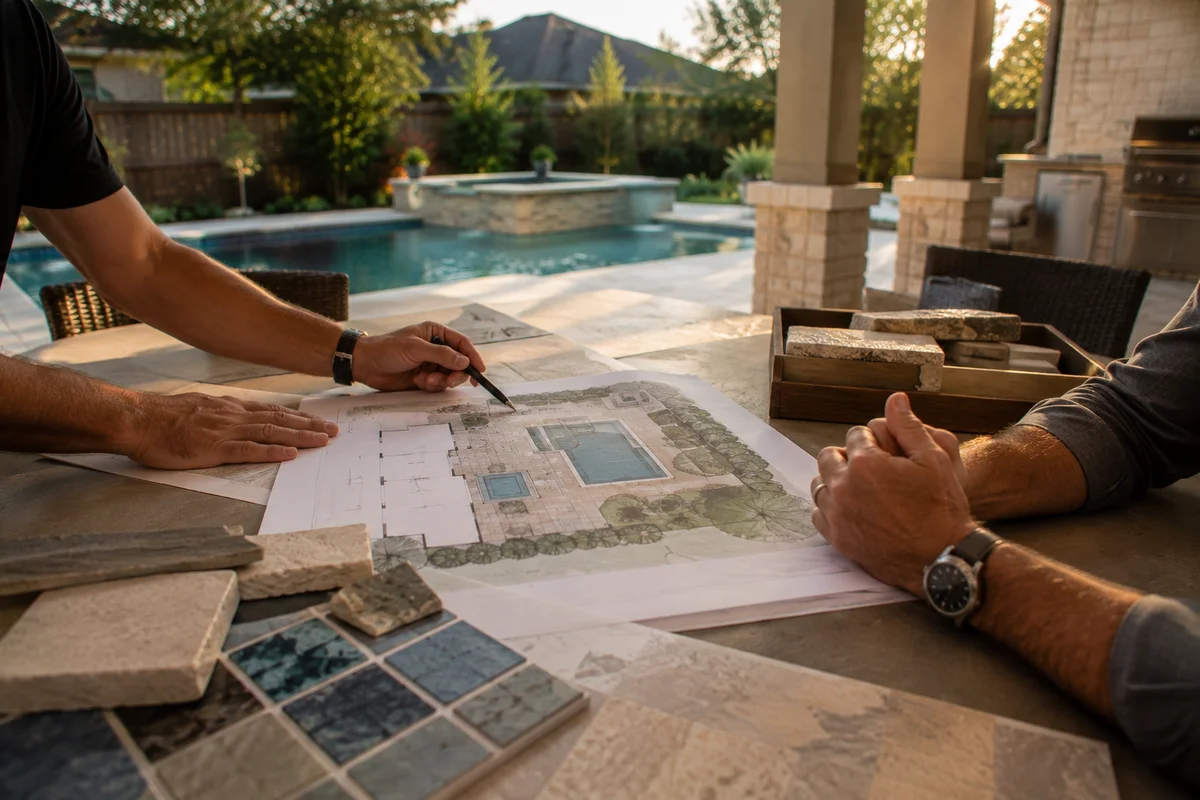
Phase 1 · Consultation
A site walk and an honest conversation about goals, constraints, budget expectations, access, drainage, trees, and utilities.
- Your decision: You decide whether we’re the right fit. No pressure either way.
- What can extend it: Nothing yet. This step costs you an hour.
Phase 2 · Design
The pool and outdoor living layout is developed for your specific lot, working from setbacks, easements, sun path, sight lines, and how your family will use the space.
- Your decision: You approve the design and the written scope, covering inclusions, exclusions, and the decisions that remain open.
- What can extend it: Revision rounds. Good design takes the iterations it takes.
Phase 3 · Engineering & permits
Structural engineering for Houston soils, permit applications to the city or county, and HOA architectural submissions, sequenced and tracked.
- Your decision: You review the final engineered plan.
- What can extend it: Municipal and HOA review runs on their calendars, not ours. We track it and report weekly.
Phase 4 · Construction
Excavation, steel, plumbing, gunite, tile and coping, decking, equipment set, and plaster run as sequenced phases with a walkthrough at each milestone.
- Your decision: You approve selections as they’re installed and flag anything that doesn’t look right at walkthroughs.
- What can extend it: Weather, inspection scheduling, and material lead times. We tell you when a day slips and why.
Phase 5 · Startup & orientation
Water chemistry startup, equipment configuration and automation setup, and a full orientation of your system.
- Your decision: You accept the project against the written scope.
- What can extend it: Plaster cure requirements set the pace of the first weeks. We walk you through the care schedule.
Phase 6 · Aftercare
Documentation, warranty registrations, and support after the first swim. Same point of contact.
- Your decision: You call the same person you’ve worked with all along.
- What can extend it: Nothing. This is where the discipline pays off.
The written scope
Included, in writing
- Design and engineered plans
- Permits and HOA submissions
- Every construction phase listed by name
- Equipment, by model, in the proposal
- Startup and orientation
Excluded, in writing
- Anything not listed is not implied
- Site conditions we can’t see are handled as documented allowances, not surprises billed later
Owner decisions
- Finish, tile, coping, decking selections
- Change orders approved by you, in writing, with a price, before the work
Pentair Partner. Astorga is a Pentair Partner, and Pentair is the equipment we specify. Every pump, filter, heater and automation model is named in your written proposal, so there is nothing vague to argue about later.
One person is accountable for your project from the first site walk through startup. Questions about design, schedule, or scope go to the same phone number the whole way through. Comparing us with another builder? The quote comparison checklist lines two scopes up fairly.
Common questions
How long does a pool project take?
It depends on design complexity, permitting and HOA review, weather, inspections, and how quickly selections are made. We don’t quote guaranteed durations. We walk you through the specific variables on your project before you sign, and we report progress at every phase.
The variable-by-variable breakdown is in our Houston pool timeline guide.What happens when it rains during construction?
Rain pauses certain phases like excavation, gunite, and decking, and Houston gets real rain. Weather days are built into how we communicate the schedule. You’ll know what a rain delay affects and what happens next, rather than wondering why nobody showed up.
Who handles permits and HOA approval?
We prepare and sequence permit applications and HOA architectural submissions as part of the project. Approval timelines belong to the city, county, or association. We set expectations honestly and keep you posted rather than promising dates we don’t control.
How are changes handled once construction starts?
In writing, with a price, before the work happens. A change order states what changes, what it costs, and how it affects the schedule. No verbal “we’ll work it out later.”
Request a site walk.
About an hour on your lot with the person who would build it: goals, access, drainage, trees, utilities and a straight answer on budget range. It is a first conversation, not a commitment, and there is no proposal pressure either way.
Planning for next summer starts earlier than many homeowners expect: design, engineering, permits and HOA review all happen before the first shovel. How long a pool takes in Houston walks through the calendar.