
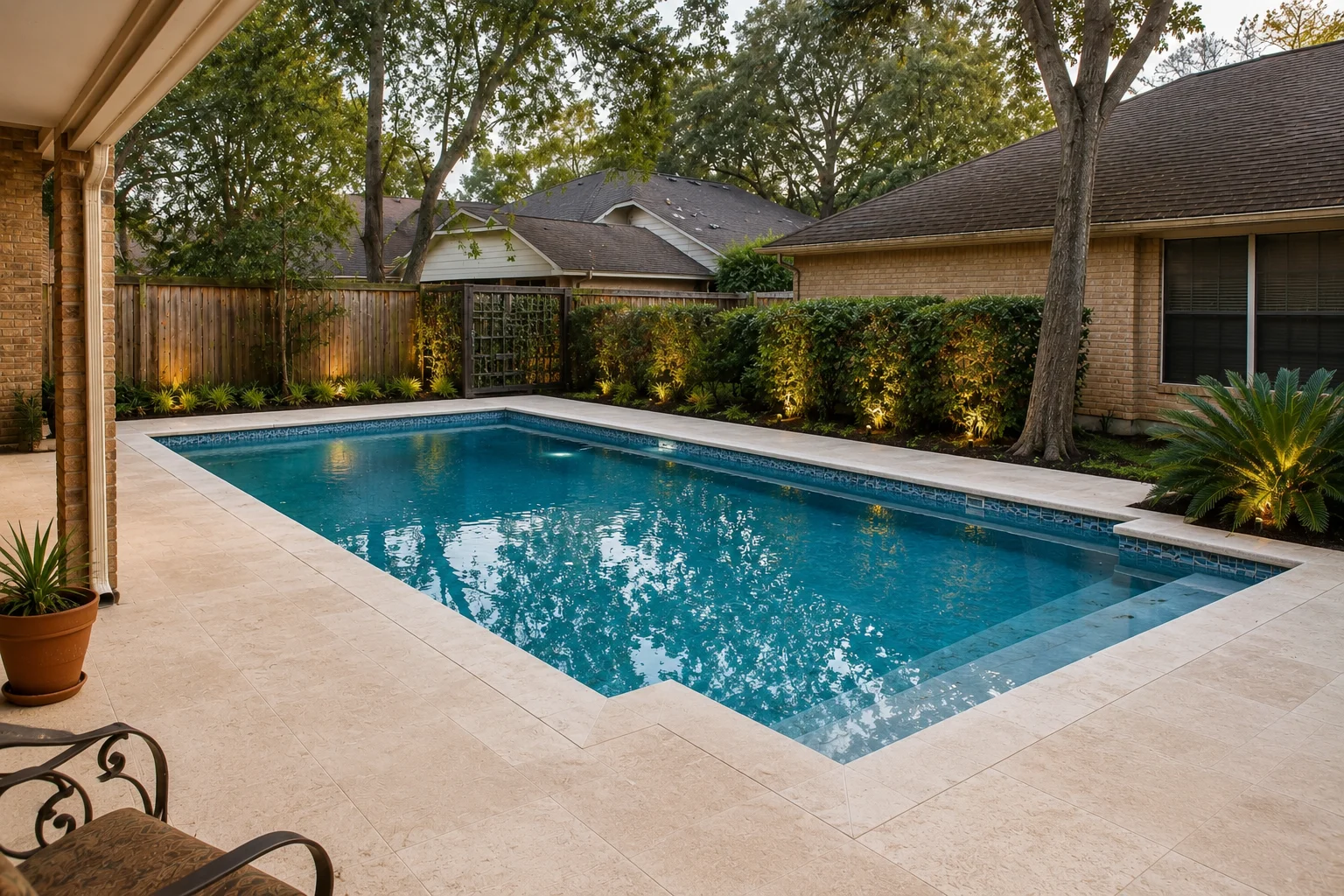
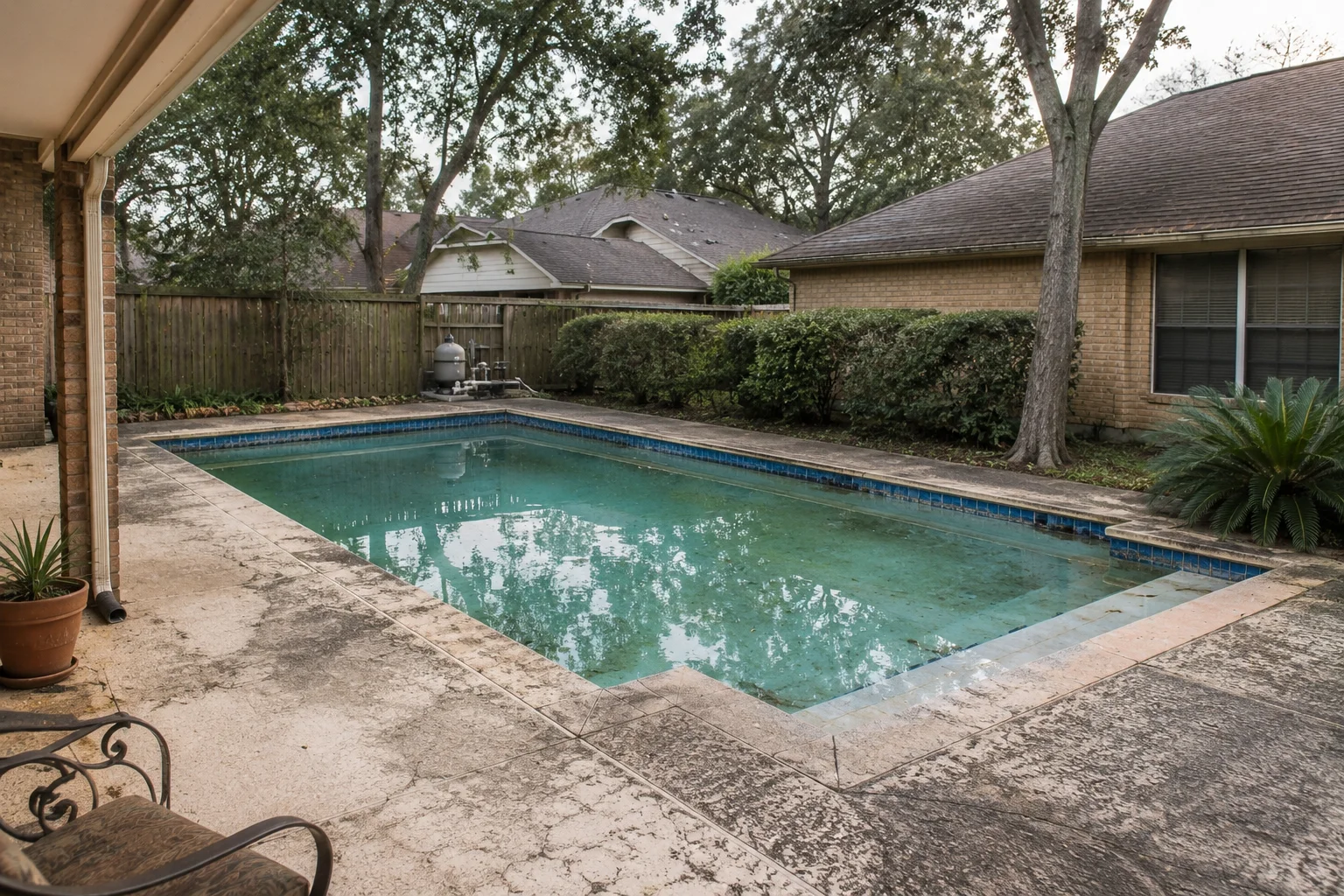
A study in restoring an aging backyard pool instead of replacing it: keep the sound shell, renew every surface the eye touches, fix the water problems first, and phase the rest. Slide to compare the existing condition with the completed restoration concept. Same pool, same camera, every surface renewed.
 Before
Design
Before
Design
Compare the existing pool with the Astorga restoration concept. Use the slider to reveal more of either image; arrow keys adjust in small steps.
View the restoration planning notes
Existing conditions
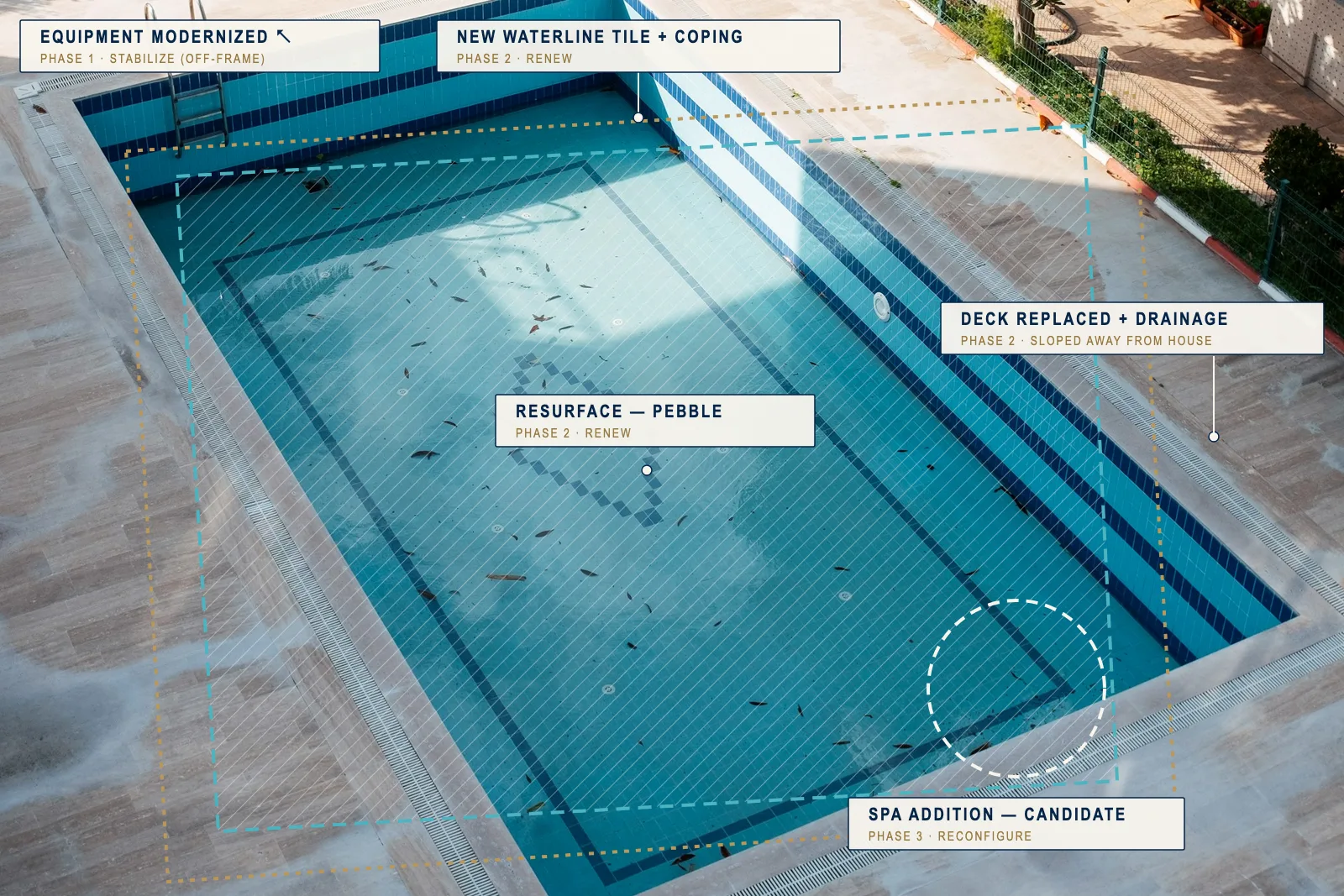
A structurally serviceable pool showing its age: worn interior finish, dated waterline tile, coping past its prime, a deck that drains toward the house, and equipment near the end of its life. The bones are worth keeping; almost every visible surface is not.
Homeowner goals
Make the pool inviting again without paying for a new shell; fix the drainage annoyances for good; get equipment that doesn’t require apologies; and leave room to add a spa and outdoor kitchen later without redoing today’s work.
Why this design?
The concept retains the existing shell and footprint because the structure supports it. That single decision redirects budget from demolition to the surfaces and systems that define daily experience. Finish, waterline tile, and coping are selected together so the largest visible planes cooperate instead of competing. The deck is re-poured with honest slope away from the house, because cosmetic upgrades over bad drainage are money rented, not spent.
Project manager’s notes
The equipment pad moves three feet to gain service access. The cheapest moment to fix a lifetime annoyance is while the deck is already open. Conduit for future landscape lighting goes under the new deck now; pulling wire later costs a trench.
Why we didn’t
- Full demolition was rejected. The shell’s condition didn’t justify paying to destroy an asset.
- A shape change was deferred. Cutting the shell is possible but structurally involved, so the budget served surfaces and water management first.
- A decorative water feature waited. Deck, drainage, and equipment carry the daily experience. Spray features don’t.
Houston expert tip
Older Houston pools often sit beside older plumbing. Before selecting finishes, pressure-test what you can’t see. A restoration sequenced around a leak find costs far less than one interrupted by it.
The evolution of this backyard
Phase 1 · Stabilize
Structural and plumbing assessment, leak correction, drainage correction, equipment modernization. The unglamorous phase every later dollar depends on.
Planning range pending site review.
Phase 2 · Renew
Interior resurface, waterline tile, coping, and the re-poured deck. The visible work, done once, on a corrected base.
Planning range pending site review.
Phase 3 · Reconfigure
Spa addition on the prepared side, patio expansion, outdoor-kitchen rough-in where the gas stub already waits.
Planning range pending site review.
Phase 4 · Complete
Lighting on the pre-run conduit, shade, planting, and the fire feature. The layers that make it feel finished.
Planning range pending site review.
Future-expansion provisions
- Gas stub at the future kitchen wall while the trench is open
- Electrical conduit under the new deck for lighting and future spa controls
- Equipment pad sized for a heater that isn’t installed yet
Design confidence checklist
- Existing assets evaluated
- Drainage considered
- Restoration feasibility considered
- Equipment access considered
- Future expansion considered
- Maintenance considered
- Houston climate considered
- Night lighting considered
Maintenance insight
A fresh interior finish asks for disciplined startup chemistry in its first weeks, so we hand over the schedule in writing. New tile and coping are the easy part; keeping the rebuilt deck’s joints sealed is the habit worth forming in year one.
What you can learn from this concept
- Decide what’s worth preserving before selecting finishes.
- Correct drainage before spending on cosmetics.
- Move service-access problems while surfaces are already open.
- Run conduit and stubs for later phases before concrete closes the door.
If this were our backyard…
We would spend the contingency on the plumbing assessment, not extra tile trim. And we’d keep the mature shade tree by the fence even though removing it would simplify the deck pour.
Walk through the restored backyard
Morning coffee on a deck that finally drains away from the door. Kids in a pool that looks new because every surface they touch is. The old equipment corner, now quiet and serviceable, ignored the way good equipment should be. At dusk, the first phase of lighting comes on, wired the day the deck was open, finished the month the budget said yes.
More concept studies
This is one of four planning studies that show how we think through a yard before anything is built: the family backyard retreat, the large Houston backyard, and the full outdoor-living transformation. Each is a concept, not a completed project; the projects page explains how we use them. What a program like any of these costs starts with our Houston pool cost guide.
Request a site walk.
About an hour on your lot with the person who would build it: goals, access, drainage, trees, utilities and a straight answer on budget range. It is a first conversation, not a commitment, and there is no proposal pressure either way.
Planning for next summer starts earlier than many homeowners expect: design, engineering, permits and HOA review all happen before the first shovel. How long a pool takes in Houston walks through the calendar.